Wednesday, September 23, 2009

our little motu…


we had a nice day on the beautiful little motu!
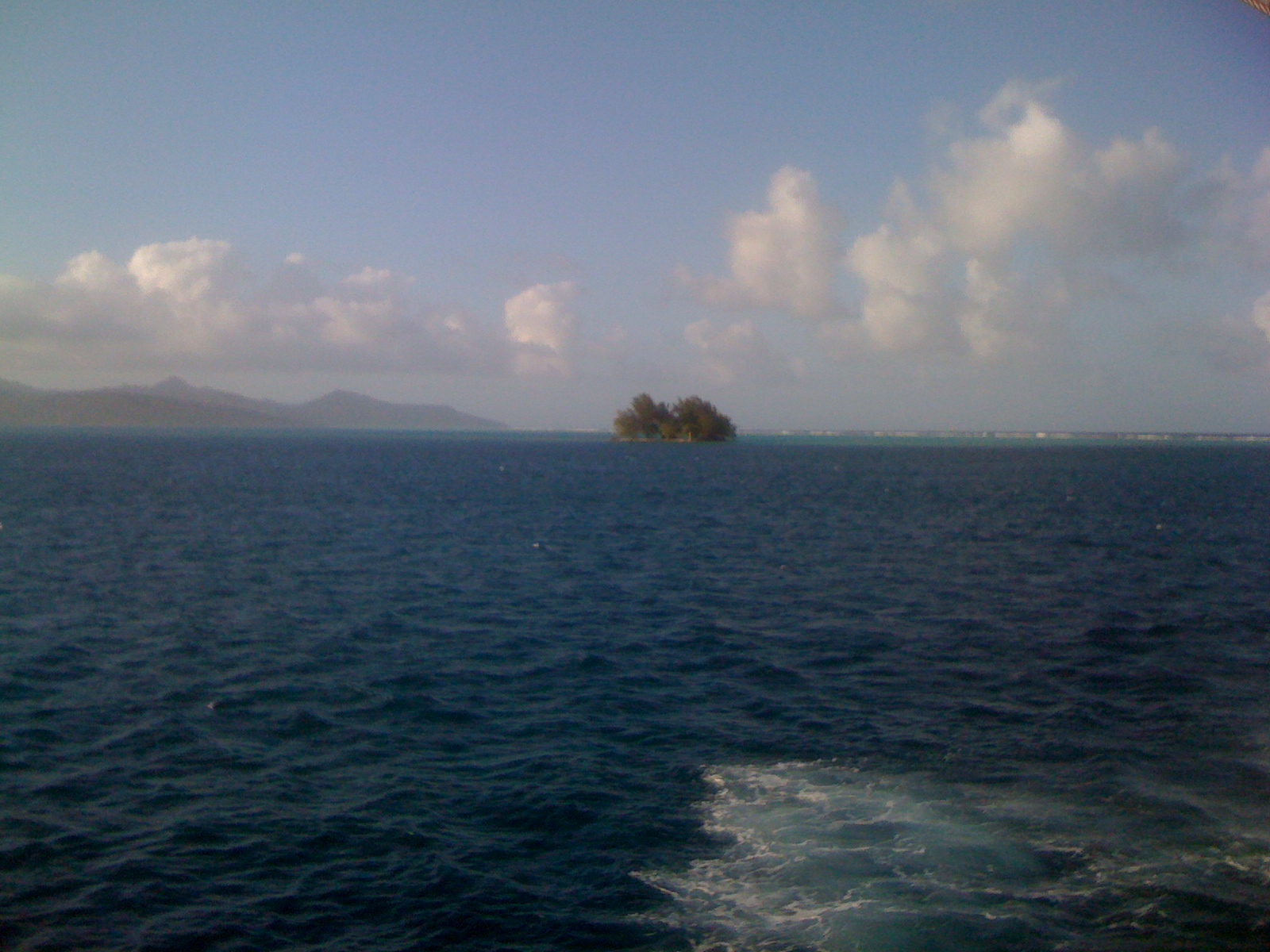
Wednesday Taha'a


We sailed to the sister island of Raiatea, Taha'a, and will spend the day on a motu (little islet, seen in background of this pic) of Taha'a. There will be a beach BBQ for lunch, followed by a Polynesian show on the beach. We set sail for Bora Bora this evening.

Tropical Bar


Susan enjoying a Mai Tai.

"Tropical Bar"


the open-air bar on ship

Guy and Chyrstal


Fellow passengers - from Belgium.

Tuesday, Raiatea island


Today we went on an excursion where we kayaked up the Faaroa River and visited a jungle with amazing tropical flowers. We then kayaked back down the gentle river. (This photo is not related to the excursion.)

Tuesday, September 22, 2009

Tuesday AM, Raiatea


Rainbow over the island of Raiatea just after dawn. Raiatea is our destination today.

Monday, Cook's Bay, Moorea


We took the tender to the island. this photo shows our ship, the Star Flyer, with coral in the foreground and a volcanic mountain in the background.

Sunday, September 20, 2009

Layover in LA


beer. football game. fashion magazine. long layover in LA.

the trip begins…


Tough to say "bye" to Kido. At the Indy airport now, on the plane… after slight delay caused by fire alarm and evacuation in the terminal.

Friday, February 20, 2009

Greetings from Germany


Greetings from Germany! We have enjoyed our stopover in Oldenburg, Germany. We are staying in the home of Helga Bernhoft. She was Susan's "Mom" when Susan was an exchange student for a summer in high school. Her "Dad", Hans-Dieter Bernhoft passed away about a year ago. We've also been visiting with Birgit, Susan's exchange "sister". Susan has made regular visits to Germany ever since being an exchange student. For me, this is my third trip to visit the Bernhofts. We also visited with some of my relatives while here. My Cordes ancestors emigrated from this area around 1860. We met many of them during a visit in 2002 and had dinner with some of them again on this trip. "Cordes" is a typical family name in these parts. Notice the heating, plumbing, and electric van that we took a picture of. We came across it in downtown Oldenburg. Tomorrow we head home. We miss the Kenya people and weather and we're sure to miss our German friends and food. We hope you've been enjoying the blog and we look forward to catching up on our return.

Monday, February 16, 2009

Monday in Eldoret, Feb 16


Today was our last full day in Eldoret. Tomorrow afternoon our group leaves Eldoret. By early Wednesday morning we'll be in Amsterdam. Susan and I will take a train to Oldenburg, Germany, while the rest head back to Indianapolis. Susan and I will visit her "exchange family" from her high school days (who she/we have made regular visits to over the years.) We will also visit at least one distant cousin from Kyle's side of the family who also lives in Oldenburg. (Kyle's great-great-grandfather emigrated from the area.)

Today, Kyle worked with the hospital engineering team on repairing the autoclave machines with limited success. Susan assisted Adam with a hand surgery on a child who had two fused fingers from a congenital problem. (One "after" photo included.) Adam performed a procedure where the two fingers are separated and remaining skin is stitched together in a zig-zag pattern along with some grafted skin.

We gave some small gifts to our respective colleagues today. We also gave some toys to the pediatric ward where volunteers help take care of some of the orphaned children.

I've included some "street scenes" in today's photos. These include a cow that is part of a small herd being walked along a rather busy road, presumably to graze somewhere. The walking paths along the roads are very, very dusty, so there are lines of shoeshine people that line certain streets and alleys. Cell phones here are all pre-paid. You can buy minutes at a kiosk. They are seemingly everywhere. On the busy streets, they will be only a few feet apart (as shown in photo.) Out in the countryside, they will be sparse but they'll be around! There is no opportunity to buy movies on DVD in stores, but you can buy pirated ones on the street.

This evening, we all went to one of the anesthetist's home and had a lovely dinner. First we toured their home, then had drinks and an excellent African dinner. It started with roast goat as an appetizer then we had rice with beef stew, fried potatoes, chapatis, spinach and chicken. We felt so honored to be welcomed into their home.

Sunday, February 15, 2009

Caleb, Sunday, Feb 15


2nd update for Sunday: Before dinner, we went to the hospital to check on Caleb, the Tanzanian cattle herdsman who had the huge parotid tumor removed on Friday. So far, so good! His facial nerve was sacrificed with the tumor (as expected) so the left side of his face is partially paralyzed. But he looks great from a clinical perspective and his surgery wound appears to be healing well to this point! Hopefully the drain in the incision can be removed tomorrow. He is so happy and thankful to the surgeons. He is so grateful. He thanked all of them many times. This photo shows Adam, Caleb, and Susan.

Lake Baringo & Lake Bogoria, the weekend


Two IU SUV's and two drivers drove us to Lake Baringo on Saturday morning. (First we visited the patient from Thursday's big surgery. So far, so good. We'll check on him again late this (Sunday) afternoon.) To drive took a few hours. These lakes are in the bottom of the Rift Valley. The total elevation change goes from well over 6,000 feet down to 3,200 feet, so the area is much more hot and arid.

When we arrived, we took a boat to the largest island in Lake Baringo. The islands are volcanic. We were spending the night at the "Island Camp", which other than the local villages, is the only thing on the island. The camp consists of tents under their own roofs, with floors, with attached bathrooms. These were similar to those at Masai Mara, but... shall we say... more basic. Lake Baringo is a large freshwater lake and is known for being home to over 200 species of birds (and hippos and crocodiles!) We settled into our tents, had some lunch, and hung out by the pool for a couple hours. It was so hot, the pool was a welcome site! We then went on a guided birdwatching tour. We made our way through the neighboring village on the tour. The most interesting bird that was large enough to get a good picture of was a stork.

Saturday evening we relaxed at the outdoor bar and then had a barbecue dinner outside. One notable thing about all of Kenya, but especially out in the country, is that you can see many more stars than at home. There is much less "light pollution" so they really stand out. We had a rough sleeping night in our tent. It cooled off outside, but not quite enough to make our tent comfortable. The air during the day was always filled with bird songs of all types. At night the birds were quiet and the wind picked up, so the sounds we heard were rustling leaves in the trees and waves gently tapping the rocks at the shore. It was just too hot to get much sleep. I (Kyle) was dozing off and on while Susan was having more trouble sleeping at all. She claimed to hear strange noises outside the tent. I was too tired to care and brushed it off. She sat up in bed to listen for a while, sure that she was hearing something. Morning came and we met up with our group to take a boat tour around the island at 7:00 am. Another neighbor tent heard the same noises. Turns out it was a hippo that was eating some grass or brush or whatever between our tents and the shore (which isn't much distance at all!) Hippos eat at night and then spend the hot days in the water. We enjoy getting close to mother nature, but not that close at night in our sleep!

Our boat tour was very interesting. We saw many different species of birds, the larger ones being types of egrets, cranes, and a type of eagle. The "Fish Eagle" is one that swoops down and plucks a fish out of the water and takes it back to it's tree. Our guide helped facilitate the process by bringing some fish to toss into the water. It was an amazing site. We have quite a few pictures of this activity. We also saw some hippos, but only the tops of their heads sticking out of the water. We did see one crocodile. It was fairly small - maybe 6 feet or so. It scurried off the rocks and into the water before I could get a good picture of it.

After our tour, we had breakfast and boated back to the mainland and then drove to Lake Bogoria, which was less than an hour away. Lake Bogoria is a salt lake and is home to thousands of flamingos. Along the way we saw some Impalas and ostriches, too, but at the lake, just thousands of flamingos.

Both of these lakes are fed by rivers in the rainy seasons (not now) but are also fed by gurgling hot springs. Lake Bogoria has some geysers that shoot up 10 feet or so.

We are now back in Eldoret in the mid-afternoon on Sunday, so it's early morning back home and the day is just starting...

Friday, February 13, 2009

Big day in the Theatre (Operating Room), Friday, Feb 13


Kyle here. I started the morning helping the hospital engineering staff to diagnose and repair some of their large, bright, movable operating room lights. These were donated by the IU med center long ago (used) and need some overdue maintenance. We worked in a couple of the OR's, one of which had a patient getting prepped for surgery. Somehow it was ok for us to be working above during the prep work... We also were in the attic above the OR's chasing down wires and testing transformers that power the lights. When my work slowed down, I decided to check on Susan in her OR. Today was the day that she and Dr. Cohen, and a local ENT and a local Plastic surgeon removed what must have been the worlds largest parotid tumor. (For non-medical people like me, a parotid gland is a salivary gland. This tumor was between the size of a supersized grapefruit and a small volleyball. This is a benign type of tumor, but this one had been growing for 8 years! I don't want to get into too much detail... But the case was interesting and I watched most of it in the OR. The surgery took about 6 hours. There were complications along the way including a question as to whether they could get enough blood for the patient and one time the breathing tube (endotracheal) came out during surgery causing a controlled panic (if that makes sense - maybe I should say controlled urgency) but they quickly got the patient re-intubated. Anyway, I'm only showing "before" and "after" pictures to save you all from the actual surgery pictures. I'm sure Susan will be happy to share additional photos if you want. Incidentally, the "after" picture includes a medical drain coming out of the suture line in case you're wondering what you see.
Tomorrow we will start with a quick post-op check of this patient. Then our group heads to Lake Baringo for the weekend. We expect to see hippos, crocodiles, and many species of birds. We hope to post again on Sunday.

Thursday, February 12, 2009

Moi Teaching and Referral Hospital, Thursday, Feb 12

Susan here. I have now spent more time at the hospital including a day in the operating room. I can't begin to describe how different it is compared to the US. And the pictures don't do it justice either, but I will try to hit some of the high points and the rest, well, if you want to hear more, we'll need to sit down with a Tusker beer some time and talk about it. This picture is between two of the patient wards.
The grounds of the hospital are beautiful with flowers, and there is laundry hanging about here and there. It is so nice to walk from hospital building to hospital building outside in the warm sunshine. At work in the US, I usually don't see the light of day from the time I come in in the morning until it's time to leave.


The operating room customs here are so different. First of all, there's this thing about shoes. Just inside the door to the theatre building (that's what the OR is called here...very British), there is a short bench where you take off your shoes before swinging your legs over the bench and then going into the locker room to change clothes and put on OR shoes. So...there is this area with everybody's shoes tucked under this bench. Once through the locker room area, there is a large open pre-op space. All patients are admitted at least the day before surgery and when it's time for their surgery they are brought to the pre op area. The picture above is in the OR where we did ENT cases today. There are a lot of medical students, about 10 or so. And the room is quite dark, especially since one of the OR lights doesn't work and there is only natural light from windows on the other side of the hallways, no other lighting in the OR. It is also quite warm in the rooms, since there is no air conditioning, only the open windows (yes, open windows in some of the ORs, but not the ENT room). There are screens on the windows though.


Before starting the cases this morning, I gave the students on ENT a talk about cricothyrotomy and tracheotomy. I didn't have a computer or projector for my power point, so I just talked. They very diligently took notes and asked some questions, so I think it went okay.


This picture shows Dr. Cohen at work with his counterpart, doing a cleft lip repair. Their OR was across from ours, so we couldn't look across to each other's rooms and see what was going on. Their room had windows.


Each OR is named after someone and the room ENT usually works in is named for this fellow, a Masai chief. His picture hangs over the door to the room. The equipment used in the OR was quite unbelieveable. It is so old and in pretty bad shape. In addition, there are very limited instruments available. It is amazing how these doctors make do with such instruments and equipment. In a couple of the photos above, you can see the little table with instruments on it; well, that's it. Those are the instruments for the whole case. Even the smallest case we do in the OR has a much larger instrument set. They also re-use nearly everything (for example the bovie wand), whereas nearly everything we use in the US is disposable and thrown away after each case. As for the ENT concepts, we are on the same page as far as knowledge about various diseases, but the management is very different, mainly because of such amazingly limited resources. We were supposed to removed the giant tumor today, but it got late (4pm) so they delayed the case until tomorrow morning. TIA! (ie "this is Africa" That was our little saying whenever things just didn't happen the way they should or didn't happen at all or didn't make any sense. We used that acronym a lot when I was here in 1993, and we're using it a lot this trip.)