Wednesday, February 4, 2015

Wednesday, Operating "Theatre"

Top: Kia and Susan performing sinus surgery using equipment we brought a few years ago, donated by Stryker.

Bottom: Henry and Bruce removing a sub-mandibular mass.

Tuesday, February 3, 2015

Mangos

Henry, one of the local ENT's and a good friend, brought us some fresh mangos. We enjoyed a few at breakfast this morning.

Lights out

Clinic is going late this evening, and now the electricity went out and no generator kicked in. So everyone is working with headlights and cell phone lights and pushing through. There are more patients to be seen!

Patient laundry

Every day there is patient laundry hanging up to dry between the patient wards at the hospital. Family members typically do the washing in large plastic pails and dry the laundry on clothes lines or on top of bushes.

Coke names

Most days I buy a case of sodas from a nearby duka (shop) and take them to the operating theatre for refreshments.

Similar to Coke's recent marketing plan in the US where they put names on Coke cans and bottles, here they put names on bottle caps of the returnable glass bottles.

More on clinic

Here's Kia examining a boy with a thyroglossal duct cyst. His mom didn't speak English, so a med student acted as an interpreter. And he probably learned from Kia's exam at the same time.

Crowded clinic

On Tuesday, the surgeons, residents, and nurses were busy in the "theatre" (operating room). I will go there tomorrow so I can post some photos. In the meantime, as surgeries were wrapping up in the mid-afternoon, Susan, Kia, and Diana went back to the ENT clinic to see more patients. This photo shows that the main clinic room is packed. In addition to the patients, family members, doctors and nurses; there are also eight medical students observing today.

More on cell phones

Here are examples of the messages received after making a call or sending a text, telling you how much you were charged.

KES = Ksh = Kenyan shillings.
Current exchange rate, $1.00 = 93 Ksh.

Let's talk... about cell phones

In the US, we pay monthly for cell service, even if it's a discount "prepaid" service.  Typically calls and text messages are included plus a certain amount of data services if it's for a smart phone.  

In Kenya, it is uncommon to pay for service by the month although it is an option. Most Kenyans elect to pay for airtime.  You pay for airtime by buying scratch cards. Like a scratch-off lottery ticket, you scratch off the gray coating to reveal a long PIN number.  Then you dial a series of numbers including the pin code and "send" to add the value to your account. 

See photos below of front and back of a 100 shilling scratch card. It's worth a little more than a dollar. It can be used to apply that value for calls/texts or for data services. After each call you make or text you send, you automatically receive a message telling you how much value that call or text cost. The cost is based on the length of the call and perhaps time of day and if the call was made to another customer of the same carrier or a different carrier.

Incidentally, because the pricing is different here in Kenya than in the US, it drives different behavior.  For example, calls here tend to be very brief and to the point. Kenyans don't get chatty on a phone call when paying by the second. At the end of the conversation they simply hang up. There may not even be a "goodbye".

When we first started coming here, the cell companies would handout Sim cards on the street hoping people would take them and then buy airtime from that company. Then a couple of years ago a federal law was implemented requiring all SIM cards to be registered.  Now each SIM card and phone number needs to be registered with an official ID such as a passport or drivers license.  The purpose of this is to prevent criminals from using "burner" or throw away cell phones in the process of committing crimes.

So the last couple of years it has been more difficult to get SIM cards. You had to go to a cell company's retail store to buy and register SIM cards. Also, if you don't use your cell service for three months, it automatically expires. Because of this I have to go through the process of buying SIM cards and registering them every year when we come here.

Now this year at least one of the carriers has gotten more aggressive with its marketing, and it is stationing people in various high-traffic areas with SIM cards to more easily facilitate the process. The upper picture shows a little table roadside with SIM card packages on it and a company representative who will do the registration process online via the phone. 

All in all the cost of owning and using a cell phone in Kenya is far less then in the US. I use an older iPhone while here and I probably won't spend more than $5 for voice, texting, and data.  Most people here have a simple "bar" style cell phone that makes calls and does simple text messaging.  They typically cost about $30 new or half that used. But I am seeing more and more smart phones here every year.

The data services here fail in comparison to the AT&T data services that I'm used to at home.  In most of the country there are 2G data services available and some 3G in the cities.  Even the 3G data is very, very slow. I'm a spoiled with 4G LTE high-speed data we have in the US.

Another difference here is that the cell phone companies also offer some banking services.  Many Kenyans don't have access to a regular bank. So the cell companies offer financial services similar to PayPal in a way. You can add money to your account and send money from your account to other people's accounts using the cell company network. This can be useful for paying for goods or services, or for sending funds back to relatives in a village that may need your financial support.

That's enough about cell phones, at least for now…


Sent from Kyle's AT&T iPhone

Wal-mart

Nakumatt, the Wal-Mart of Kenya. They have everything. Now open 24 hours.

Morning commute obstacles

Well, the cows aren't really obstacles, but do watch your step.

Swahili lessons

I have restarted my Swahili lessons with the local teacher, or mwalimu in Swahili, as I do each year. Because I don't keep it up, I always restart at lesson 1, but I made it through the first 4 lessons in my hour this morning. Maybe by the end of this trip I will actually advance further this year. We'll see...

Monday, February 2, 2015

For my AT&T friennds

In February of 2010 I posted the lower picture, noting that "innerduct" had recently been trenched in and I was excited that soon a fiber optic cable would be installed in it. I hoped that the area would then perhaps have better internet access speeds.

Well, five years later, I'm still waiting. Still no cable; just an empty innerduct.

No Ebola here

Ebola is on the other side of the continent, nowhere near Kenya, but there are educational posters in the hospital.

Monday ENT Clinic

Others looking with interest as Kia examines vocal chords using an endoscope.
Bruce, Susan, And Dr. Sisenda examine a patient.
Aria discussing with a patient and family.
Diana and her "Don't take my picture" picture.
Here are some pictures from Monday's clinic. Patients were pre-screened by the local ENT surgeons, with the more unusual or difficult cases being asked to come back today for examination and possible surgery by our group. They will start operating on Tuesday.

Sunday, February 1, 2015

Monday morning

The Superbowl just ended and much of the US is going to bed now, but here, the sun will soon be coming up over Indiana House.

Aria is on a flight from Nairobi to Eldoret as I write. He will soon join the rest of us.

We have arrived at Indiana House in Eldoret

We have arrived safe and sound!

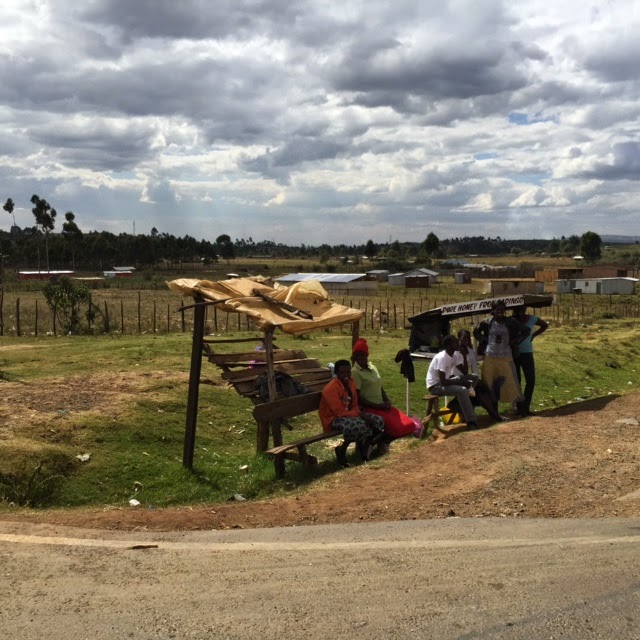
Roadside honey stand

Get your fresh honey without leaving your car.

On the road

Lots of traffic, lots of trucks and buses , on the road to Eldoret, mid afternoon Sunday.

Luggage van

We are driving from Nairobi to Eldoret. We are in one van and our luggage is in another, and it is packed tight!

Saturday, January 31, 2015

We have landed in Nairobi

Gang's all here (almost)

Kathi, Bruce, Diana, and Kia ready to board flight to Nairobi. We will meet up with Aria, our 7th and final traveler on Monday in Eldoret.

Amsterdam

We arrived safely and on time in Amsterdam for a ten hour layover. Susan and I treated ourselves to a day room at the Mercure hotel that's inside the airport. It was so nice to get some sleep and a hot shower.

Friday, January 30, 2015

Lots of supplies

Way too much luggage for two people. But most of it is surgical supplies. We will be much lighter weight on the return. The KLM agent was very helpful and allowed us to be overweight with our luggage AND carry-ons.

All checked in at San Francisco international airport

We're still pretty fresh at this point. By the time we get to Nairobi, not so much.

And so it begins...

The hardest part of traveling to Kenya isn't the 40 hours of travel time, it's dropping the dogs off in Willits and watching them be led away.

Sunday, January 18, 2015

Packing supplies for trip to Kenya

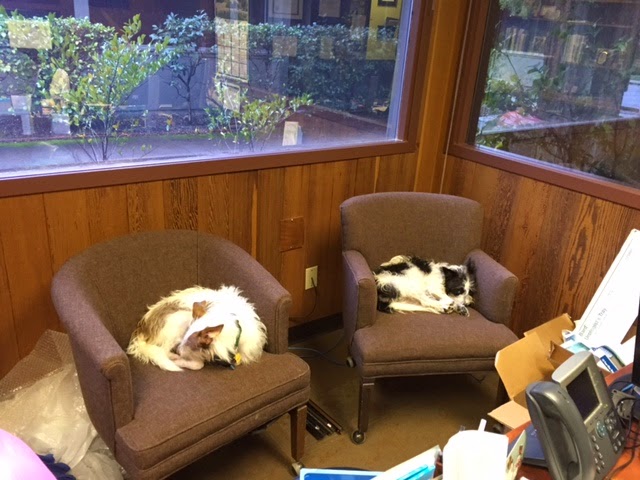
It's almost time for our annual trip to Kenya. Susan is in her office packing donated medical supplies for us to take. Moshi and Malaika are keeping us company but aren't much help.

Tuesday, January 13, 2015

Visiting the California coast in winter

We visited the California coast (Pacific Ocean) at various locations between the towns of Mendocino and Fort Bragg.

Point Cabrillo Lighthouse near Mendocino
wild calla lilies growing near the lighthouse
Susan looking for whales near Fort Bragg
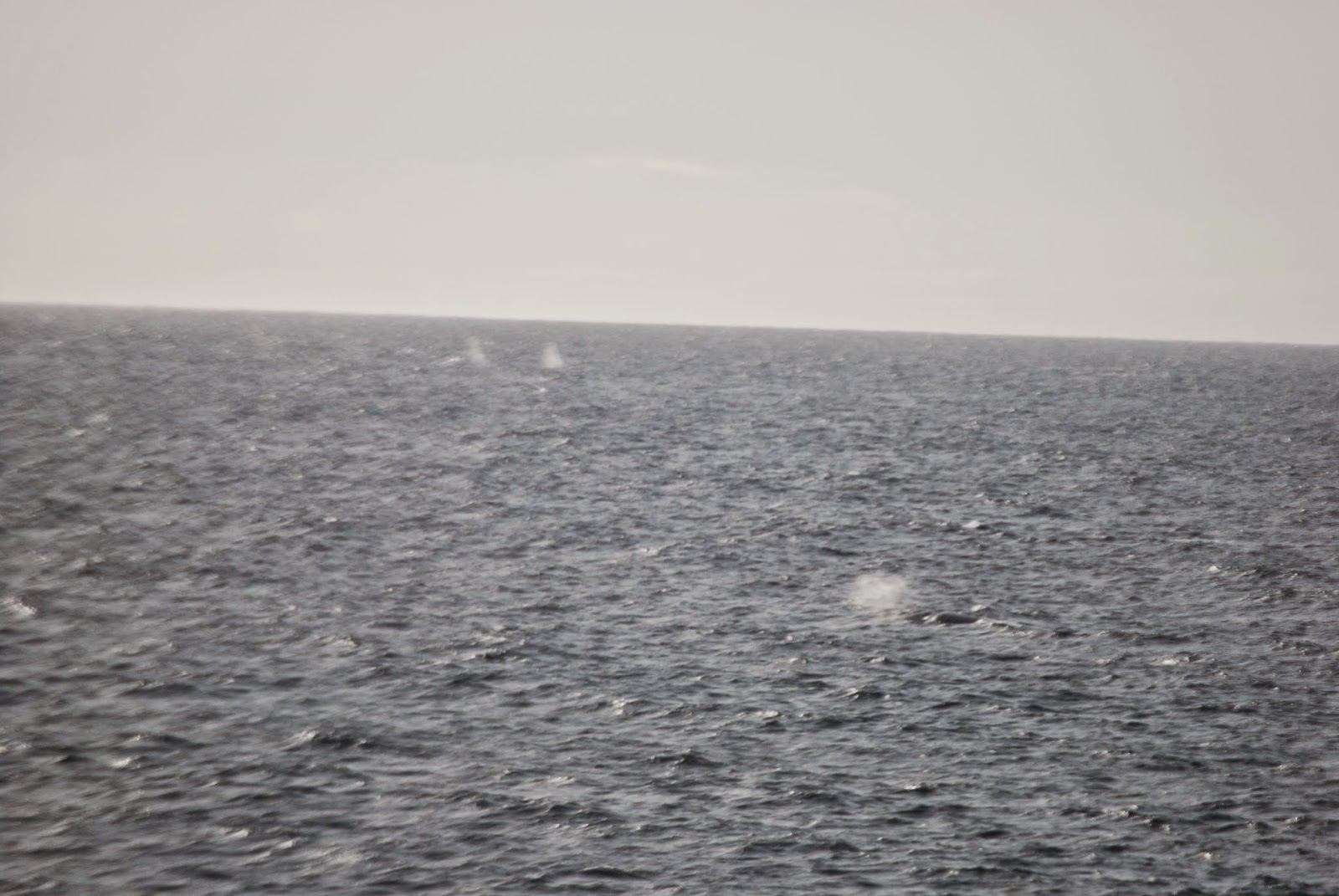
three whale spouts or sprays near Fort Bragg